San Diego County Warehouse Market Report: Q1 2026
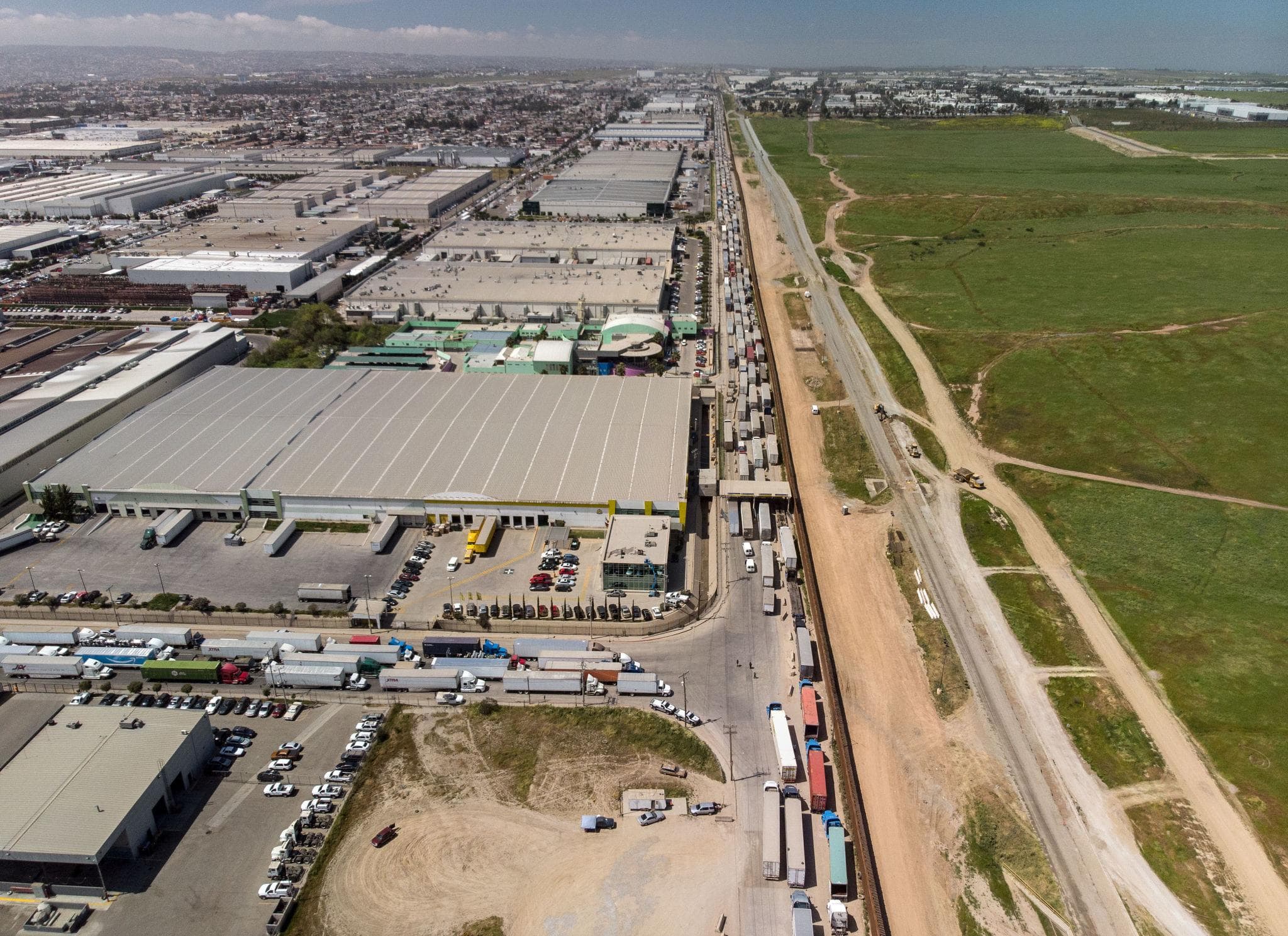
San Diego County’s industrial and warehouse market entered 2026 in a stabilization phase after several years of strong development and demand. While vacancy has increased—particularly in Otay Mesa and South County—the region’s strategic logistics role, cross-border trade activity, and limited industrial land supply continue to support long-term demand.
San Diego County Industrial and Warehouse Market Report
Regional context and why the market matters
San Diego County sits at a rare intersection of global supply chains and high-barrier coastal real estate. Its industrial and warehouse market is shaped by three structural advantages that continue to anchor long-term demand even as the cycle has shifted toward more tenant leverage.
-
Gateway positioning in Southern California logistics
- The county plugs into the broader port-driven distribution ecosystem anchored by and , which together handled roughly 10.24 million TEUs and about 9.9 million TEUs respectively during calendar year 2025.
- Within the county, contributes specialized cargo activity, including vehicle imports and bulk and breakbulk operations, which supports niche industrial users and ancillary logistics.
-
Cross-border leverage through and the San Diego–Baja trade corridor
- The Otay Mesa area functions as the county’s primary warehouse and distribution node for binational trade, customs brokerage, transload, and near-border fulfillment strategies.
- Border-related infrastructure investments, including the SR 11 and Otay Mesa East port-of-entry effort, are designed to increase throughput and reduce congestion, directly reinforcing the long-run case for modern logistics product in the South County pipeline.
-
A land-constrained, infill-heavy industrial footprint
- The county’s developable industrial land is limited by geography and competing residential and life science uses. This acts as a structural rent and value support over the cycle, even when vacancy rises in the short run.
Market overview and current conditions
As of March 2026, the most current credible market data is largely based on fourth quarter 2025 results published in early 2026. Across major broker research platforms, San Diego County’s industrial market has clearly moved off the ultra-tight conditions of 2021–2022 and into a rebalancing phase characterized by higher vacancy, softer asking rents, and greater tenant choice.
Key themes defining conditions at year-end 2025 and into early 2026 include the following:
-
Vacancy in the high-single digits, depending on provider definitions
-
Reported overall vacancy for Q4 2025 generally clustered in a band from the mid-6 percent range to the low-9 percent range.
-
The spread is driven by differences in:
- county-only vs. broader regional coverage
- “industrial” vs. “industrial and flex” mixes
- direct-only vs. direct plus sublease methodologies
-
-
Availability in the low-teens when measured as total market availability
- Total availability measures in late 2025 commonly land near the 12 to 13 percent range in countywide reporting.
- Direct availability remains meaningfully higher than the sublease component, though sublease space increased in select submarkets.
-
The most pronounced softening is concentrated in larger-block logistics nodes
- The South County warehouse node exhibits both the largest construction pipeline and the highest vacancy, particularly compared to older multi-tenant mid-bay nodes closer to central employment and consumer concentrations.
Comparative submarket snapshot
The following table consolidates a consistent set of submarket indicators from a single research platform to support apples-to-apples comparison. Metrics reflect Q4 2025 conditions.
| Submarket group | Total vacancy rate | Q4 2025 net absorption | Under construction | Average asking rent, NNN per month |
|---|---|---|---|---|
| Central County | 13.4% | 199,033 SF | 0 SF | $1.78 |
| North County | 7.1% | 186,721 SF | 288,705 SF | $1.37 |
| East County | 3.7% | 29,680 SF | 0 SF | $1.45 |
| South County | 11.3% | 139,183 SF | 1,823,586 SF | $1.21 |
| Otay Mesa | 12.9% | 190,433 SF | 1,823,586 SF | $1.14 |
| San Diego County total | 9.3% | 612,837 SF | 2,112,291 SF | $1.49 |
Supply, demand, and leasing activity
The supply and demand story in late 2025 was about a market digesting prior deliveries, with construction moderating, absorption turning positive on a quarterly basis, and leasing shifting from scarcity-driven behavior toward choice-driven optimization.
Supply pipeline and new construction
Across major research providers, San Diego County’s construction pipeline remained active but more restrained than during the post-pandemic peak. The pipeline is heavily skewed toward South County, where developable industrial land is comparatively more available.
-
Construction is concentrated in South County
- Otay Mesa alone represented the largest share of space under construction in county submarket reporting at year-end 2025.
- Construction is largely aimed at modern logistics requirements such as higher clear heights, better truck courts, and stronger trailer parking ratios.
-
A large-format project presence continues to define the cycle
- has remained a major driver of modern build-to-suit distribution activity in the South County pipeline, with a large facility in the Otay Mesa area cited as a key anchor delivery.
-
Deliveries have moderated
- New deliveries in Q4 2025 were described by at least one major brokerage dataset as unusually low relative to the prior multi-year delivery cadence, reflecting a broader pullback in speculative construction starts earlier in the cycle.
Absorption and leasing
The leasing market in Q4 2025 showed a measurable improvement from the weaker quarters earlier in the year. Importantly, the recovery is not uniform across submarkets.
-
Net absorption turned positive in Q4 2025 across multiple sources
- Several leading datasets reported positive net absorption for the quarter, while full-year 2025 totals varied from modestly negative to clearly negative depending on methodology.
-
Leasing activity remained healthy but uneven
-
Tenant demand has skewed toward:
- flight-to-quality moves into better-performing first-generation logistics buildings
- renewals and operational rationalization rather than aggressive footprint growth
-
Larger-block leasing is disproportionately associated with South County availability, and was cited as the quarter’s largest lease in one major brokerage report.
-
Notable recent leases and tenant moves
Notable move-ins and transactions reported during Q4 2025 and early 2026 publications highlighted continued activity among distribution, rental/fleet, and cross-border users.
- executed a large move-in reported at roughly 128,000 SF.
- Multiple sources cited large warehouse leasing activity tied to customs brokerage and cross-border logistics.
- Activity in North County also featured notable leasing volume, reflecting its diverse base of light industrial, distribution, and specialized users.
Rental rates, concessions, and pricing trends
San Diego County’s industrial rents are best understood as two related but distinct stories.
One story is infill mid-bay and industrial-flex product in central and coastal employment nodes, where vacancy can remain relatively constrained and asking rents are structurally higher.
The other is warehouse and distribution product in the county’s larger logistics corridors, especially South County, where larger-block availability and new construction have shifted negotiating leverage toward tenants.
Countywide asking rent levels and direction
Q4 2025 reports consistently described a softening trend.
-
Asking rents generally fell year over year
- Multiple broker platforms reported countywide average asking rents in the approximate $1.4 to $1.5 per SF per month range on a triple-net basis, with year-over-year declines commonly in the mid-single-digit range.
-
Submarket rent spreads remain wide
-
Central County submarkets showed higher average asking rents, reflecting:
- higher land values
- constrained supply
- higher shares of flex and higher-finish industrial product
-
South County average asking rents were lower, consistent with its role as the county’s large-block logistics valve.
-
Tenant concessions and negotiation posture
While published research typically focuses on asking rents rather than effective rents, multiple early-to-mid cycle reports noted that effective economics have become more tenant-friendly even where average asking rents are slow to reset.
-
Common tenant-favorable deal features in the current cycle include:
- increased free rent periods on longer terms
- higher tenant improvement allowances for credit tenants
- more flexible expansion, contraction, or early-termination structures in certain submarkets
- increased willingness to negotiate for larger-block requirements, particularly in newer logistics buildings competing for absorption
A warehouse-specific view
Warehouse and distribution rents are generally best represented through South County and Otay Mesa benchmarks.
-
Otay Mesa asking rents in Q4 2025 submarket data averaged roughly $1.14 per SF per month NNN, materially below Central County averages.
-
This differential is consistent with a market where Otay Mesa is absorbing:
- the bulk of modern big-box pipeline deliveries
- the largest blocks of immediately available logistics space
- much of the cross-border tenant base most sensitive to tariff and trade-policy uncertainty
Sales and investment activity
Investment conditions in late 2025 were shaped by interest-rate normalization, tighter credit, and a more selective buyer universe. Despite that, San Diego County remains a high-conviction industrial market for long-term capital due to its scarcity profile and durable logistics relevance.
Transaction volume and pricing
Q4 2025 reports documented meaningful investment activity, with variation in total volume by data source and transaction inclusion rules.
-
Reported Q4 2025 investment volume ranged from mid-hundreds of millions to over $800 million, depending on the reporting platform.
-
Average price per SF metrics remained high relative to long-term history, reflecting continued value support for infill and well-leased assets.
-
A recurring theme across reports:
- investors are willing to pay for functional, well-located assets
- but underwriting is more conservative, and deal velocity is slower than during the 2021 peak
Cap rates and yield expectations
Using a late-2025 cap rate survey benchmark, San Diego industrial cap rates moved into a more normalized range relative to the prior ultra-compressed period.
-
Indicative San Diego industrial cap rate ranges in H2 2025
- Class A stabilized: about 5.0% to 5.5%
- Class B stabilized: about 5.5% to 6.25%
-
Implications for buyers and sellers:
- higher going-in yields have improved the feasibility of acquisitions for investors with lower leverage or all-cash strategies
- sellers with very low basis or long-held assets may still transact, but pricing expectations must align with the higher cost of capital
Notable deals and investor behavior
Recent publications flagged several illustrative transactions highlighting the continued depth of buyer interest.
- A fully occupied warehouse in Carlsbad occupied by was cited as a notable acquisition at roughly $72.9 million by .
- was referenced as acquiring multiple warehouse assets in Carlsbad as part of a portfolio transaction.
- A major institutional transaction involved and as part of the buyer-seller ecosystem reported in late-2025 deal commentary.
Economic drivers and cross-border influencers
San Diego’s warehouse fundamentals are best explained through the lens of trade flows, employment in industrial-using sectors, consumer behavior, and interest rates.
Port throughput and Southern California distribution gravity
Year-end 2025 port statistics reinforced the durability of Southern California’s role in North American import flows.
-
The Ports of Los Angeles and Long Beach remained among the most important U.S. gateways by container volume.
-
For San Diego County warehouse users, these ports matter not because the county is the primary inland container destination, but because they:
- set the baseline for West Coast import cycles
- influence inland drayage and regional distribution decisions
- affect available warehouse demand across the broader Southern California footprint
Cross-border trucking and trade policy sensitivity
Cross-border mechanics are central to South County.
- data indicates that inbound truck crossings at U.S. land borders totaled about 12.86 million in 2025, slightly below the prior year.
- Otay Mesa consistently appears among the leading U.S.–Mexico truck ports in federal trade reporting, reinforcing its status as a strategic logistics node.
- In brokerage reporting, the 12-month import and export trade value at the Otay Mesa Port of Entry was described as approximately $60.7 billion as of October 2025, slightly below earlier peak levels reported in 2025.
Operational takeaway for occupiers and investors:
-
Tariff and trade-policy uncertainty can rapidly influence leasing decisions for:
- import-dependent distributors
- cross-border manufacturers and suppliers
- customs brokers and freight forwarders
-
This sensitivity tends to concentrate volatility in:
- large-format warehouse demand near the border
- short-term expansion decisions for tenants considering long-term leases
E-commerce and consumer-driven distribution
E-commerce remains a structural demand driver for warehousing nationally and regionally.
-
reporting shows e-commerce represents a mid-teens share of total retail sales, with third quarter 2025 reported at 16.4% on the referenced quarterly release.
-
Practical implications for San Diego County:
- continued last-mile and micro-fulfillment demand near population centers
- higher tenant preference for infill locations with fast access to consumers and labor
- ongoing relevance of modern dock-high product for parcel and regional distribution
Employment, inflation, and interest rates
Industrial real estate fundamentals remain tightly linked to employment in goods movement and to the cost of capital.
-
Recent publications cited:
- modest job growth in the region overall
- cooling in some industrial-using categories such as manufacturing and trade, transportation, and utilities during parts of 2025
-
The interest-rate environment continues to influence:
- development feasibility for speculative projects
- buyer underwriting assumptions for cap rates and exit values
- occupier decision-making related to expansion and inventory policies
-
communications and reference-rate data in early 2026 confirm a policy rate held in the mid-3% range after cuts in late 2025, keeping financing costs materially above the ultra-low-rate era that drove the prior industrial pricing surge.
Challenges, opportunities, and outlook for 2026 and beyond
San Diego County’s warehouse market entering 2026 can be summarized as “structurally strong, cyclically softer.” The region’s long-term constraints and trade relevance remain intact, but the near-term environment rewards disciplined underwriting and operational flexibility.
Key challenges
-
Higher vacancy and larger-block competition
- South County and Otay Mesa vacancy and availability are elevated relative to the rest of the county, reflecting new supply and broader tenant caution.
-
Policy-driven volatility
- Tariff uncertainty and shifting trade rules can delay occupancy decisions, particularly for border-dependent occupiers.
-
Capital markets friction
- Even after late-2025 rate cuts, borrowing costs remain high enough to restrain speculative groundbreakings and suppress some investment volume.
-
Sublease overhang in select nodes
- Sublease availability rose meaningfully in certain submarkets, creating alternative supply that competes directly with landlords’ vacant blocks.
Opportunities
-
Tenant market conditions for occupiers
-
Tenants with near-term lease expirations can often:
- pursue flight-to-quality upgrades
- negotiate for better economic packages than in 2021–2022
- secure large-block logistics space closer to target nodes, especially in Otay Mesa
-
-
Selective acquisition opportunities for investors
-
With cap rates in the 5% to 6% band for much of the market spectrum, buyers able to manage basis and capital structure can target:
- well-located multi-tenant warehouses
- value-add repositioning plays in older industrial corridors
- longer-term redevelopment land strategies tied to the county’s scarcity profile
-
-
Development that is targeted, not speculative
- Build-to-suit logistics, specialized cold-chain, and cross-border-support facilities remain the most defensible development strategies, particularly where entitlements and land costs create steep barriers to entry.
Outlook through 2026 and into 2027–2028
A reasonable baseline outlook, grounded in the late-2025 data and early-2026 indicators, points toward stabilization first, then gradual tightening.
-
2026 baseline expectations
-
Vacancy likely remains in a high-single-digit range with meaningful submarket variation:
- higher in South County logistics nodes
- lower in constrained infill and mid-bay nodes
-
Asking rents likely stay flat to modestly down on average, with effective rents more influenced by concessions.
-
New deliveries are expected to be more disciplined than the 2021–2023 surge, but the Otay Mesa pipeline will continue to add competitive modern product.
-
-
2027 and beyond
-
If speculative development remains restrained and leasing demand normalizes, the market should gradually work through elevated availability.
-
Long-run rent growth potential remains supported by:
- constrained land and entitlement pathways
- continued e-commerce-driven distribution requirements
- durable binational trade activity, assuming border throughput investments progress as planned
-